
Category Archives: Budget Industry

A MK 15 Phalanx close-in weapons system (CIWS) is test fired on the flight deck aboard the aircraft carrier USS Carl Vinson (CVN-70). US Navy Photo

Document: U.N. Report Calling For Moratoria on Lethal Robots

From the summary of the U.N. Report of the Special Rapporteur on extrajudicial,summary or arbitrary executions, Christof Heyns. The report calls for a suspension of lethal robotic technology until international rules can be drafted:

Lethal autonomous robotics (LARs) are weapon systems that, once activated, can select and engage targets without further human intervention. They raise far-reaching concerns about the protection of life during war and peace. This includes the question of the extent to which they can be programmed to comply with the requirements of international humanitarian law and the standards protecting life under international human rights law. Read More

An X-47B Unmanned Combat Air System (UCAS) demonstrator aircraft is transported  on an aircraft elevator aboard the aircraft carrier Harry S. Truman (CVN-75). US Navy Photo

U.N. Report Singles Out Two Navy Weapons Programs

By:
An X-47B Unmanned Combat Air System (UCAS) demonstrator aircraft is transported  on an aircraft elevator aboard the aircraft carrier Harry S. Truman (CVN-75). US Navy Photo

An X-47B Unmanned Combat Air System (UCAS) demonstrator aircraft is transported on an aircraft elevator aboard the aircraft carrier Harry S. Truman (CVN-75). US Navy Photo

An April U.N. report calling for suspending the use deadly robotic weapon systems singled out two Navy systems, the Phalanx ship protection weapon system and the Navy’s test platform for carrier-based unmanned vehicles as part of a report recommending an international moratoria on so-called “lethal autonomous robotics.”

Report author Christof Heyns, a human rights professor at the University of Pretoria in South Africa, mentioned the Phalanx and the Unmanned Combat Air System Aircraft Carrier Demonstration (UCAS-D) X-47B as examples of weapon systems with at least some degree of autonomous operation. Read More

Commander Naval Sea Systems Command, Vice Adm. Kevin McCoy in 2008. US Navy Photo

NAVSEA’s McCoy Speaks

By:
Commander Naval Sea Systems Command, Vice Adm. Kevin McCoy in 2008. US Navy Photo

Commander Naval Sea Systems Command, Vice Adm. Kevin McCoy in 2008. US Navy Photo

Vice Adm. Kevin McCoy, commander of Naval Sea Systems Command  has a rare interview in the latest issue of Proceedings.

While at the helm of NAVSEA for an unprecedented five years McCoy was mostly media shy while he was a driving force to realign years of damage to the way the Navy fixed its surface ships. Read More

USS Porter shortly after its collision in August, 2012. US Navy Photo

USS Porter Repair Contract Awarded

By:
USS Porter shortly after its collision in August, 2012. US Navy Photo

USS Porter shortly after its collision in August, 2012. US Navy Photo

The Navy issued a $49.4 million contract to fully fund the repairs to the USS Porter (DDG-78) putting aside one of the last iconic effects of a combined Fiscal Year 2013 Continuing Resolution and mandatory sequestration budget cuts, according to a Tuesday release from Naval Sea Systems Command. Read More

A July 30, 2012 picture of the Navy's Laser Weapon System (LaWS). US Navy Photo

Report: Lasers on U.S. Navy Ships

The following is from the introduction to the Congressional Research Service’s April, 24 2013 report: Navy Shipboard Lasers for Surface, Air, and Missile Defense: Background and Issues for Congress.

Department of Defense (DOD) development work on high-energy military lasers, which has been underway for decades, has reached the point where lasers capable of countering certain surface and air targets at ranges of about a mile could be made ready for installation on Navy surface ships over the next few years. More powerful shipboard lasers, which could become ready for installation in subsequent years, could provide Navy surface ships with an ability to counter a wider range of surface and air targets at ranges of up to about 10 miles. These more powerful lasers might, among other things, provide Navy surface ships with a terminal-defense capability against certain ballistic missiles, including China’s new anti-ship ballistic missile (ASBM). Read More

USNS Bridge resupplies USS John C Stennis in April. Bridge and USNS Rainer will be decommissioned in a Navy cost saving move. US Navy Photo

Navy to Decommission Two Oilers in Cost Saving Scheme

By:
USNS Bridge resupplies USS John C Stennis in April. Bridge and USNS Rainer will be decommissioned in a Navy cost saving move. US Navy Photo

USNS Bridge resupplies USS John C Stennis in April. Bridge and USNS Rainier will be decommissioned in a Navy cost saving move. US Navy Photo

The Navy will decommission two of Military Sealift Command’s youngest refueling and Fleet support ships in a bid to save $251 million as part of the Department of the Navy’s Fiscal Year 2014 budget, Navy officials told USNI News on Monday. Read More

USS Cape St. George (CG-71) approaches Naval Base San Diego. US Navy Photo

Navy Stands Behind 2015 Cruiser Cuts

By:
USS Cape St. George (CG-71) approaches Naval Base San Diego. US Navy Photo

USS Cape St. George (CG-71) approaches Naval Base San Diego. US Navy Photo

“Money is better spent on buying back the life of younger ships” with 25 to 30 years left, than putting it into seven cruisers the Navy wants to retire in 2015, the deputy chief of naval operations for warfare systems told a key House subcommittee on 26 April.

Vice Adm. William Burke said, “We have to balance our books” and the way the Navy chose to do that a year ago was retiring the cruisers and two landing ship docks (LSDs) early.  “I would prefer to put money into destroyers,” he said, adding that “we have enough” cruisers, all nine of which the Navy intends to operate normally until they are decommissioned. Read More

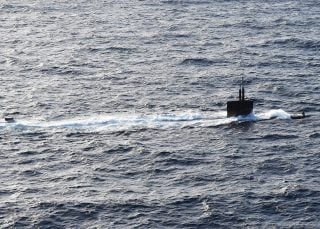
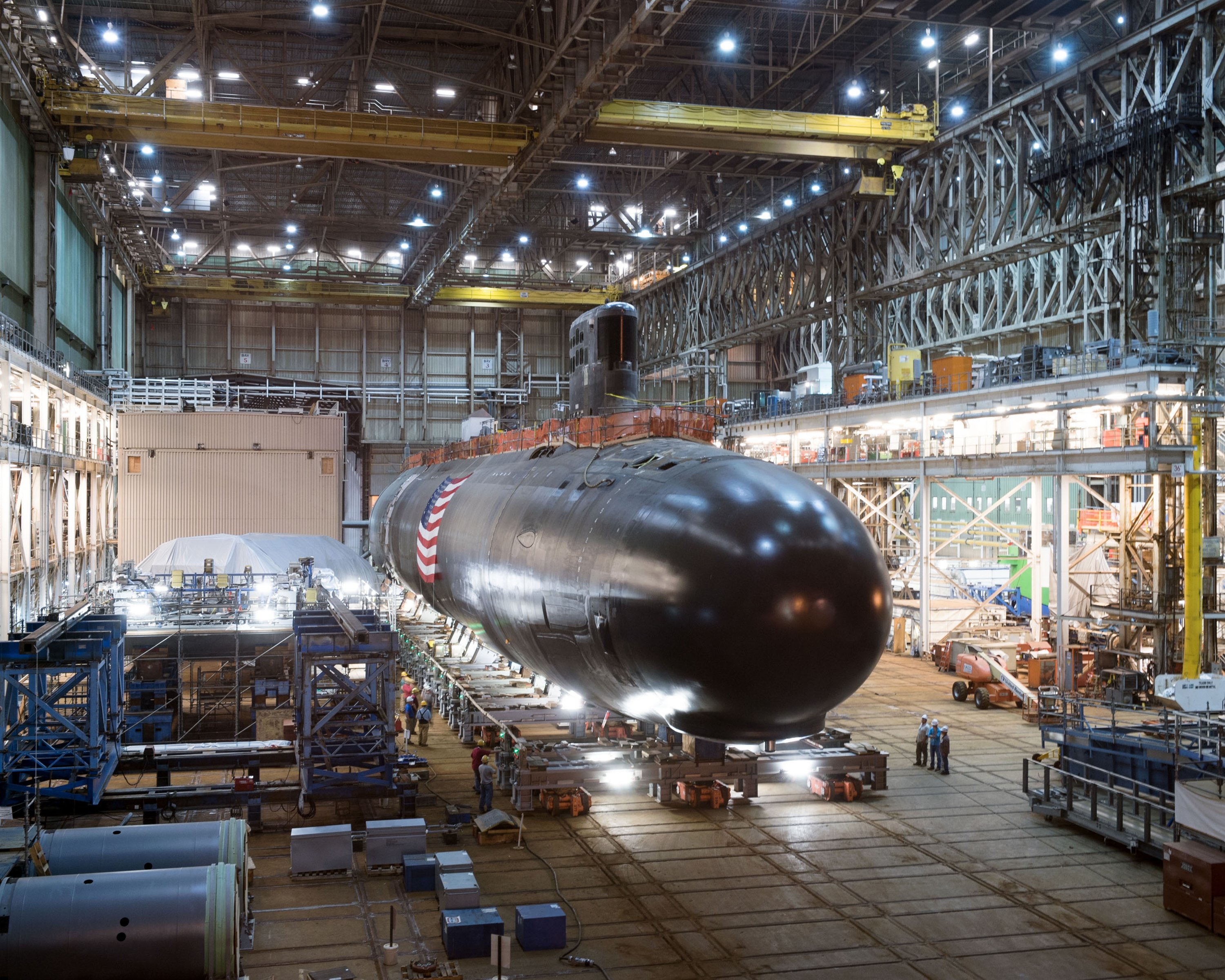
USS Maryland (SSBN-738) transits the Saint Marys River.

Stackley: Funding Ohio Replacement ‘Daunting Challenge’

By:
USS Maryland (SSBN-738) transits the Saint Marys River.

USS Maryland (SSBN-738) transits the Saint Marys River.

“The most daunting challenge” facing the Navy’s newly released shipbuilding plan is paying for the Ohio-class ballistic-missile submarine replacement when it is expected to take $100 billion—over 12 to 15 years—from that account, the service’s top acquisition official said. Read More